Blogs PMP Eligibility 2026: Who Can Apply for the PMP Exam?
Project ManagementPMP Eligibility 2026: Who Can Apply for the PMP Exam?
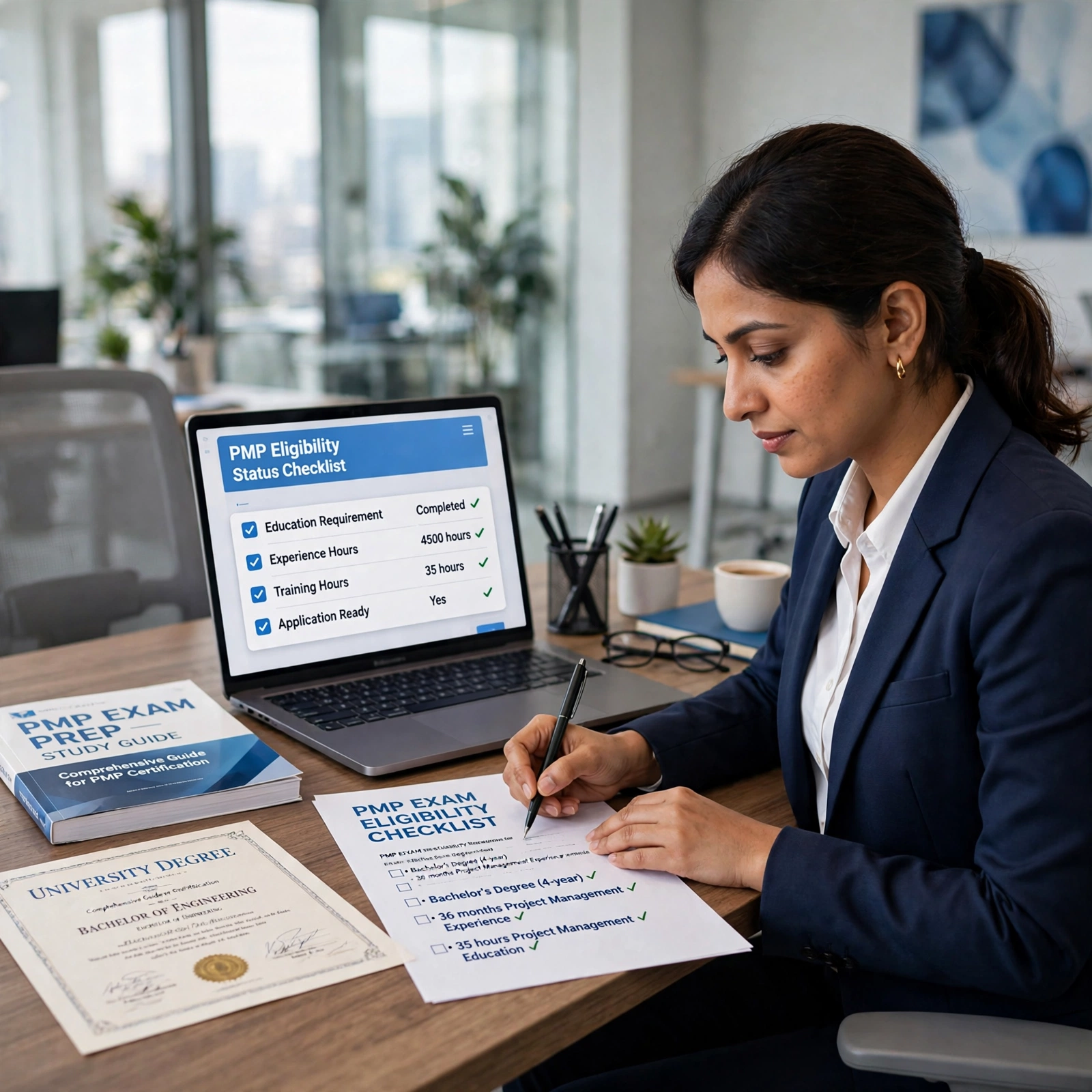
"Can I apply for PMP?" is the first question every aspirant asks — and the answer changed with PMI's July 2026 exam update. PMP eligibility has three parts: your education, your experience leading projects, and 35 hours of training. All three must be in place when you apply. This guide explains the current 2026 rules from PMI's PMP Examination Content Outline, so you can check in two minutes whether you qualify.
PMP eligibility at a glance
PMI gives you four education paths. The higher your education, the fewer months of project leadership you need — but every path also needs 35 hours of training (or an active CAPM). You only need to match one path.
| Your highest education | Experience leading projects | Training |
|---|---|---|
| High school diploma / GED | 60 months (5 years) | 35 hours, or an active CAPM |
| Associate degree / vocational diploma | 48 months (4 years) | 35 hours, or an active CAPM |
| Bachelor's degree or higher | 36 months (3 years) | 35 hours, or an active CAPM |
| Bachelor's or postgraduate degree from a PMI GAC-accredited programme | 24 months (2 years) | 35 hours, or an active CAPM |
The 10-year rule — your experience must be recent
All your qualifying experience must fall within the last 10 years before you apply. PMI widened this window in 2026 — older rules looked back only 8 years. Experience older than 10 years does not count, no matter how senior the role was.
Overlapping projects count only once
Your experience months must be non-overlapping. If you led two projects at the same time for 12 months, that counts as 12 months of experience, not 24. Count your timeline month by month, not project by project — this is the detail that trips up most applicants.
What counts as "leading projects"?
PMI wants experience leading and directing projects — not just working as a team member. If you planned the work, coordinated the team, managed stakeholders, handled risks or owned delivery, it usually counts, even if your job title was never "Project Manager". Document each project with its dates, your role and what you delivered. Keep it honest: PMI audits a random selection of applications, and exaggerated experience can block your application.
The 35 hours of training
Every path needs 35 hours of project management training, completed before you apply. One hour of instruction equals one contact hour. An active CAPM certification covers this requirement, so you do not need to document training separately if you hold one.
One important change: from 1 December 2026, PMI counts live instructor-led training only when it is delivered by a PMI Authorized Training Partner (or a China Registered Education Provider or GAC programme). EdHut Solutions is a PMI Authorized Training Partner, and its PMP Certification Training includes the 35 contact hours you need.
What if you are not eligible yet?
Short on experience: CAPM is PMI's entry-level certification. It needs only a secondary degree, you must be at least 18, and 23 hours of project management education — no project experience at all. An active CAPM also covers your 35-hour training requirement when you apply for PMP later.
Short on training: take the 35-hour course first, then apply. It is the quickest gap to close.
Experience older than 10 years: only recent experience counts. You may need more recent project work before applying.
Not sure where you stand: EdHut's application writing support can review your education and experience before you apply, so you do not waste the application fee.
The application and the audit
Once you submit your application, PMI usually reviews it within a few business days. A random selection of applications is chosen for audit — if yours is picked, you submit proof such as degree certificates, training certificates and confirmation from managers or supervisors. Keep your documents ready from the start, and never exaggerate your experience.
Frequently asked questions
Q: Can I apply for PMP without a degree?
A: Yes. A high school diploma plus 60 months of leading projects plus 35 hours of training qualifies you.
Q: How many years of experience do I need for PMP with a bachelor's degree?
A: 36 months (3 years) of non-overlapping project leadership within the last 10 years.
Q: Does my experience have to be in the last 10 years?
A: Yes. Under the 2026 rules, experience older than 10 years does not count.
Q: Is 35 hours of training compulsory?
A: Yes, unless you hold an active CAPM, which waives the training requirement.
Q: I have an MBA — how much experience do I need?
A: 36 months, the same as a bachelor's degree — unless your degree is from a PMI GAC-accredited programme, in which case it is 24 months.
Q: Can freshers apply for PMP?
A: No. Freshers should start with CAPM, which needs no project experience, and build towards PMP.
Check your eligibility with EdHut
EdHut Solutions is a PMI Authorized Training Partner with 25,000+ professionals trained and 6,200+ PMP alumni. Our PMP Certification Training gives you the 35 contact hours, 14 exam simulations and 2,000+ mock questions you need to pass on your first attempt. Not sure you qualify? Contact EdHut — call +91 704 2121 784 or email info@edhutsolutions.com.